
Ever thought if the shiny thing you bought is really worth it? In India, gold is more than just something pretty. It’s a big part of our culture and a vital financial safety net for families.
Finding the right gold piece is not just about looks. You need to know about purity and hallmarks to keep your money safe. This Gold Jewellery Buying Guide will show you how to buy quality pieces with confidence.
Learning these market rules makes you a savvy investor. Let’s see how to keep your wealth safe while enjoying the beauty of gold.
Key Takeaways
- Understand the critical difference between 22K and 24K purity levels.
- Always verify the BIS hallmark to ensure authenticity and quality.
- Learn how market fluctuations impact the final price of your purchase.
- Recognize the importance of transparent making charges and weight calculations.
- Treat your acquisition as both a personal adornment and a long-term financial asset.
Understanding the Basics of Gold Purity
Gold is more than a pretty metal; it’s a precise financial asset. When you go to a jewellery store, the terms can be confusing. But knowing these terms helps you get the best value for your money.
Learning about purity metrics gives you confidence in your choices. This knowledge protects you from bad investments. It also helps you find quality pieces that last long.
Defining Karats and Fineness
The term “karat” (K) shows the gold to metal ratio in an alloy. Pure gold is too soft for detailed jewellery. So, jewellers mix it with metals like copper or silver.
Fineness is another key term, shown in parts per thousand. For example, 24K gold is 999 fineness, or 99.9% pure. Knowing this ratio is key because it affects the price and durability of your jewellery.
The Difference Between 22K and 18K Gold
In India, 22K gold purity is the top choice for traditional jewellery. It has 22 parts gold and 2 parts alloy. This mix gives pure gold’s shine and the strength needed for everyday wear.
On the other hand, 18K gold has 18 parts gold and 6 parts alloy, making it 75% pure. It’s much harder and great for holding heavy gemstones. But it has less gold than 22K pieces. Your choice depends on whether you value the metal’s worth or the design’s needs.
Remember, 22K gold has a higher resale value than 18K. By thinking about your needs, you can pick the right gold for your financial goals.
The Essential Gold Jewellery Buying Guide for Indian Consumers
Start your gold buying journey with a clear financial plan. Many feel lost by the many designs. A Gold Jewellery Buying Guide helps you spend your money wisely.
Setting Your Budget and Purpose
First, decide how much you want to spend. A clear budget stops you from overspending. Knowing why you buy gold helps you choose the right piece.
Here are key gold investment tips:
- Include making charges and taxes in your budget.
- Think if it’s for a wedding, gift, or savings.
- Check the gold market rate before buying.
- Choose high-purity gold for saving value.
Distinguishing Between Wearable Jewellery and Investment Gold
Not all gold is the same. Some is for looks and wear, others for saving. Knowing the difference is crucial for a good Gold Jewellery Buying Guide.
Below is a table to help you choose:
| Feature | Wearable Jewellery | Investment Gold |
|---|---|---|
| Primary Goal | Adornment and Style | Wealth Preservation |
| Making Charges | High (due to design) | Minimal or None |
| Liquidity | Moderate | High |
| Purity | Usually 18K to 22K | 24K (999 purity) |
For long-term value, consider gold coins or bars. But for special occasions, the cost is worth it for artistic craftsmanship. These gold investment tips help meet your financial goals.
Decoding BIS Hallmarks
When you enter a jewelry store, the small stamps on your gold pieces tell a story. They show the true value of what you’re buying. Learning to read these symbols helps you avoid fraud.
What the BIS Logo Represents
The Bureau of Indian Standards (BIS) logo is a sign of quality. This triangular mark means the item has been tested and certified. Seeing this logo means you can trust the gold meets strict BIS hallmark standards.
Reading the Fineness and Purity Mark
Next to the logo, a number shows the metal’s purity. For example, 22K916 means it’s 22-karat gold. This mark lets you check the gold content easily.
Identifying the Jeweler Identification Mark
Every certified gold piece has a unique code. This code helps track where the item came from. Always look for this mark to make sure the seller is registered and responsible.
| Marking Component | What It Indicates | Why It Matters |
|---|---|---|
| BIS Logo | Official Certification | Guarantees quality standards |
| Fineness Mark | Gold Purity Level | Confirms the karat value |
| Jeweler Code | Unique Identification | Ensures seller accountability |
Calculating the Price of Gold Jewellery
When you enter a jewellery store, the price tag is just the start. You need to know the gold price factors that affect the final cost. This ensures you get a fair deal.
Knowing the gold market trends helps you buy at the right time. This way, you avoid high prices and save money.

Understanding the Daily Market Rate
The base price of your jewellery changes daily. It’s influenced by demand and currency rates. Retailers update these rates every morning.
Always check the rate with your jeweler against financial news. Transparency is key. A good seller will show you the current rate.
How Making Charges Impact Your Final Cost
The making charges calculation varies a lot. These costs cover the labor for making the jewellery.
Simple designs cost less, while complex ones cost more. Ask for a clear breakdown to avoid surprises.
Factoring in GST and Other Taxes
After the base price and making charges, add taxes. In India, a 3% Goods and Services Tax (GST) is added.
Make sure your invoice lists these taxes clearly. This keeps your making charges calculation accurate and follows local rules.
| Component | Description | Impact on Price |
|---|---|---|
| Gold Value | Weight x Daily Rate | Primary Cost |
| Making Charges | Labor and Craftsmanship | Variable Fee |
| GST (3%) | Government Tax | Mandatory Addition |
| Final Total | Sum of all parts | Total Payable |
Evaluating Craftsmanship and Design
The beauty of gold jewellery goes beyond its metal. The intricate design and the skill of the craftsman add value. These elements make your gold piece not just valuable but also beautiful and durable.
Machine-Made Versus Handcrafted Jewellery
Gold jewellery comes in two types: machine-made and handcrafted. Machine-made items are made in molds for perfect symmetry. They are great for a uniform look.
Handcrafted jewellery, on the other hand, is made by skilled artisans. They spend hours on each piece. This makes each item unique and valuable.
Assessing Durability and Stone Settings
Look beyond the surface when choosing jewellery. Check the strength of clasps and the flexibility of chains. A good piece should feel solid and have no sharp edges.
If your jewellery has gemstones, make sure the prongs are thick and even. Delicate settings need extra care. This ensures the stones are secure and the piece will last long.
| Feature | Machine-Made | Handcrafted |
|---|---|---|
| Production Speed | High | Low |
| Design Uniqueness | Standardized | High/Bespoke |
| Making Charges | Lower | Higher |
| Finish Quality | Uniform | Artistic |
Verifying Authenticity Before You Pay
Protecting your investment starts with a thorough verification process right at the jewelry counter. You should never feel rushed when making a significant purchase. Gold jewellery authentication is your primary defense against fraud. Taking these extra steps ensures that you receive exactly what you are paying for.
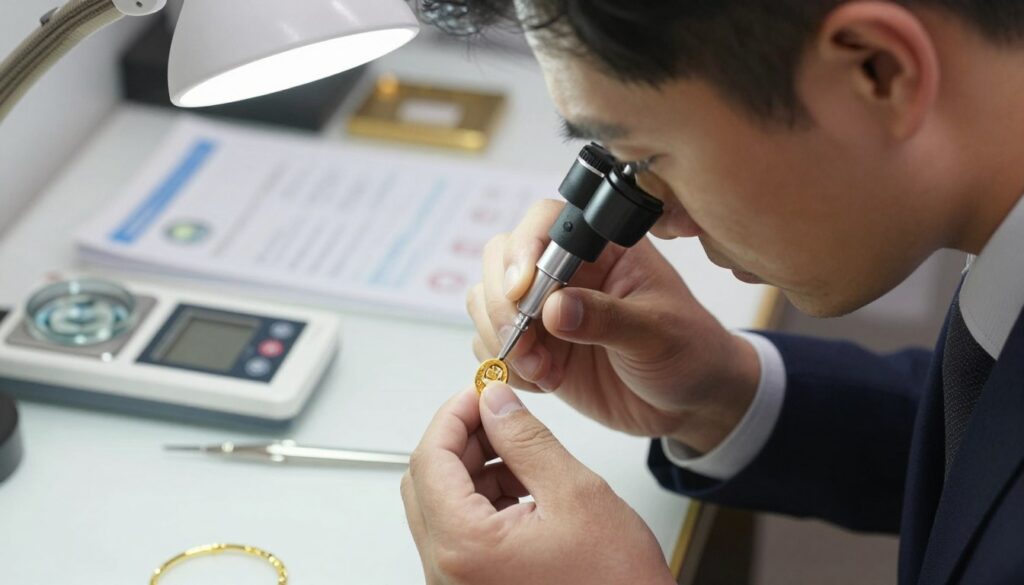
Using a Magnifying Glass for Hallmarks
Most reputable jewelers provide a loupe or a magnifying glass upon request. Use this tool to inspect the hallmark stamps on your piece closely. You are looking for clear, deep impressions rather than shallow, laser-etched marks that might indicate a forgery.
Proper gold purity testing involves checking for the BIS logo, the fineness mark, and the jeweler’s unique identification code. If the markings appear blurry or inconsistent, do not hesitate to ask for clarification or choose a different piece. Attention to detail at this stage is vital for your peace of mind.
“Trust is the foundation of any transaction, but verification is the safety net that keeps your financial future secure.”
Requesting a Detailed Invoice
A verbal promise is never enough when dealing with precious metals. Always insist on a printed, detailed invoice that explicitly breaks down the costs of your purchase. This document serves as your legal proof of ownership and quality.
Ensure your receipt includes the following specific details:
- The exact weight of the gold in grams.
- The specific purity level, such as 22K or 18K.
- A clear breakdown of making charges and applicable GST.
- The unique hallmark identification number for the item.
Understanding Buy-Back Policies
Before you finalize your payment, ask the jeweler to explain their buy-back policy in writing. A transparent policy provides you with financial flexibility if you decide to exchange or sell your jewelry in the future. You should know exactly what percentage of the current market rate the jeweler will offer for a return.
Some stores offer better rates if you exchange your old gold for new designs within their own network. Always clarify if there are any deductions for wastage or melting during the buy-back process. Knowing these terms upfront prevents unpleasant surprises when you eventually decide to liquidate your assets.
Comparing Gold Jewellery Versus Gold Coins and Bars
Choosing between gold jewellery and bullion depends on your financial goals. Jewellery is for both beauty and wealth. Bullion is for keeping your money safe. Knowing this helps in making good gold investment tips.
Liquidity and Resale Value
Jewellery costs a lot to make, and you might not get that money back when you sell it. Gold coins and bars have lower costs, which means more gold resale value. They are easier to sell because they are standard, not fancy.
“Gold is a constant in a world of financial uncertainty; it is the ultimate store of value that transcends borders and generations.”
If you want to grow your wealth, bullion is better. It avoids the costs of making fancy jewellery. This way, more of your money stays with the gold.
Storage and Security Considerations
Gold needs careful storage to keep it safe and sound. Keeping jewellery at home might need a good safe or insurance. Many choose bank lockers for their gold to keep it very safe.
Here’s a comparison to help you decide:
| Feature | Gold Jewellery | Gold Coins/Bars |
|---|---|---|
| Primary Purpose | Wearable/Aesthetic | Investment/Wealth |
| Making Charges | High (10% – 25%) | Low (1% – 5%) |
| Resale Value | Lower due to deductions | Higher and more stable |
| Storage Needs | Home safe/Locker | Bank locker recommended |
Your choice should match your lifestyle and financial plans. Mixing the joy of wearing gold with the need for gold resale value can make a strong portfolio.
Navigating Jeweler Policies and Hidden Costs
Many shoppers don’t see the hidden costs that make gold more expensive. The gold market rate is public, but the price you pay includes extra fees. Knowing these fees helps you pay a fair price for your gold.

The Truth About Wastage Charges
Buying intricate jewelry means you’ll face gold wastage charges. These fees cover the metal lost in cutting, polishing, and soldering. Jewellers say this loss is needed to make the gold into a design.
The wastage charge percentage can differ a lot between stores. Some charge a flat rate, others based on design complexity. Always ask for a detailed breakdown to avoid extra costs.
Negotiating Making Charges Effectively
The making charges calculation is the most negotiable part of buying gold. These fees cover the labor for the design. Since they’re not set by the market, you can often get a better deal, even if you’re a regular customer.
Compare making charges at different reputable stores before buying. If you love a design, ask for a discount on labor. Polite but firm negotiation can save you a lot of money.
| Cost Component | Description | Negotiability |
|---|---|---|
| Gold Value | Based on daily market rate | Fixed |
| Wastage Charges | Covers metal loss during crafting | Moderate |
| Making Charges | Labor cost for design | High |
| GST | Government tax on total value | None |
Digital Gold and Sovereign Gold Bonds as Alternatives
Today, investors are choosing paper gold to make their portfolios easier. You can now see gold prices move without owning a physical item. You also don’t have to worry about keeping it safe.
Benefits of Investing in Paper Gold
One big digital gold benefit is buying in small amounts. You can start with just one rupee. This makes it easy for anyone to invest, no matter their budget.
This way, you avoid costs like making fees and theft risks. Digital gold lets you grow your wealth slowly. It also keeps your money liquid for your financial plans.
Comparing Digital Gold to Physical Jewellery
Choosing sovereign gold bonds gives you benefits that jewellery can’t. These bonds are backed by the government. They offer a fixed interest rate, paid twice a year, making your gold earn money.
Also, sovereign gold bonds are tax-friendly for long-term investors. If you keep them until they mature, you won’t pay taxes on the gains. This is a big plus over buying jewellery.
While jewellery has beauty and cultural value, paper gold is better for growing wealth. Adding these modern options to your portfolio shields your money from price swings and extra costs.
Maintaining and Caring for Your Gold Assets
Keeping your gold jewellery looking new for years is all about care and storage. When you buy precious metals, you want them to stay shiny and strong. Follow these gold storage tips to protect your investment.
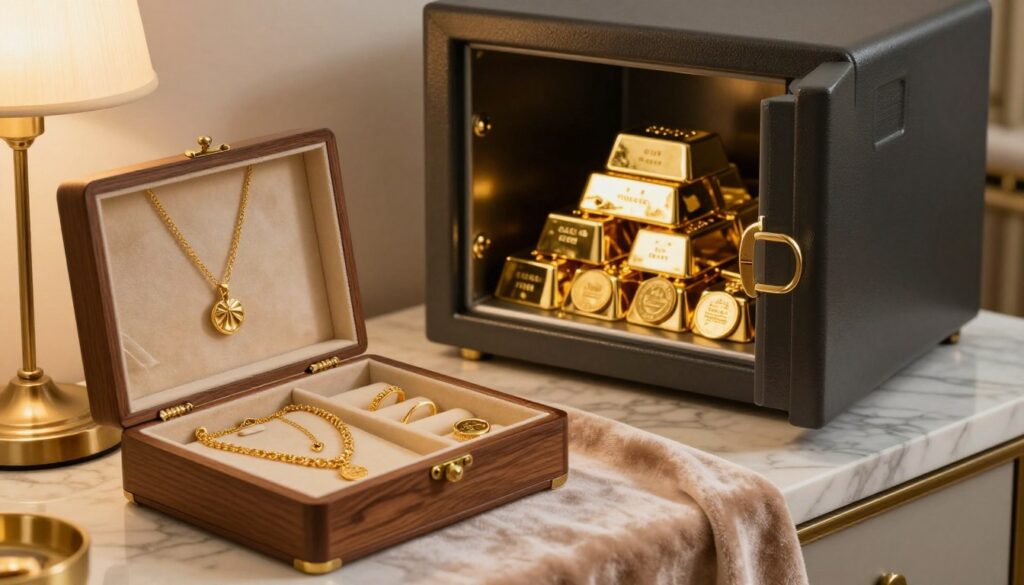
Proper Storage Techniques
How you store your jewellery affects its life. To avoid scratches, don’t let pieces rub together in a box.
Here are key gold storage tips to keep your collection safe and organized:
- Put each piece in an individual velvet-lined pouch or a separate spot.
- Keep gold in a cool, dry spot, away from sunlight to stop colour change.
- Use anti-tarnish strips in your jewellery box to keep it clean.
- Make sure your storage is safe and not too humid, like bathrooms.
Safe Cleaning Methods for Daily Wear
Even with good storage, jewellery picks up dust and oils from daily wear. Cleaning it regularly is key to keep it shiny without harming it.
Here’s how to clean your jewellery at home:
- Mix a bit of mild dish soap with warm water in a bowl.
- Soak your gold jewellery for about ten minutes to get rid of dirt.
- Use a soft-bristled toothbrush to gently clean hard-to-reach spots.
- Rinse well with clean water and dry with a soft cloth.
Don’t use strong cleaners or harsh chemicals, as they can harm the finish or stones. If you see loose settings or deep scratches, see a pro jeweler. Regular care is the best way to keep your gold’s value high.
Common Pitfalls to Avoid When Buying Gold
Many buyers in India fall into traps that hurt their gold investment. It’s not just about picking a pretty design. You need to watch for details. This way, your money goes to real hallmarked gold jewelry that keeps its value.
Avoiding Uncertified Gold Sellers
Buying from local jewelers without certification is a big mistake. They might sell low-purity gold as high-karat to make more money. Always check for the BIS hallmark to be sure of the gold’s purity.
If a shop won’t show you a hallmarked item or says it’s not important, leave. Good jewelers show their BIS license and give proof for each hallmarked gold jewelry piece. Don’t choose a cheaper price over a certified product.
Recognizing Signs of Overpriced Jewellery
It’s key to know the real gold rate versus the store price. Some shops add too much to the cost with extra fees. Always compare the gold rate with the store’s price.
If the extra charges seem too high, talk about it. A clear jeweler will explain the costs. Here’s a table to help spot warning signs while shopping.
| Feature | Red Flag | Safe Practice |
|---|---|---|
| Certification | No BIS hallmark | BIS hallmarked gold jewelry |
| Pricing | Vague “wastage” fees | Transparent making charges |
| Documentation | Handwritten receipt | Computerized GST invoice |
| Buy-back | Refusal to commit | Clear written policy |
Stay alert and ask about unclear costs to protect your money. Investing in hallmarked gold jewelry is smart, but only with trusted, certified sellers.
Conclusion
Buying gold needs careful watching and smart money handling. You now know how to check hallmarks, figure out fair prices, and tell different types of precious metals apart.
Knowing how to check BIS standards and talk about making charges helps save your money. Use these tips every time you go to a jeweler like Tanishq or Kalyan Jewellers. This way, you make sure you get the best deal for your money.
Being a smart owner is more than just buying. Always do your research to stay ahead of price changes. This helps you build a safe investment portfolio over time.
Keep this guide for your next gold purchase. Tell your friends or family about it if they want to buy gold wisely. Your careful buying habits will help secure your financial future, bit by bit.